
Understanding Outdoor Privacy: How Grass Privacy Fences Transform Your Space
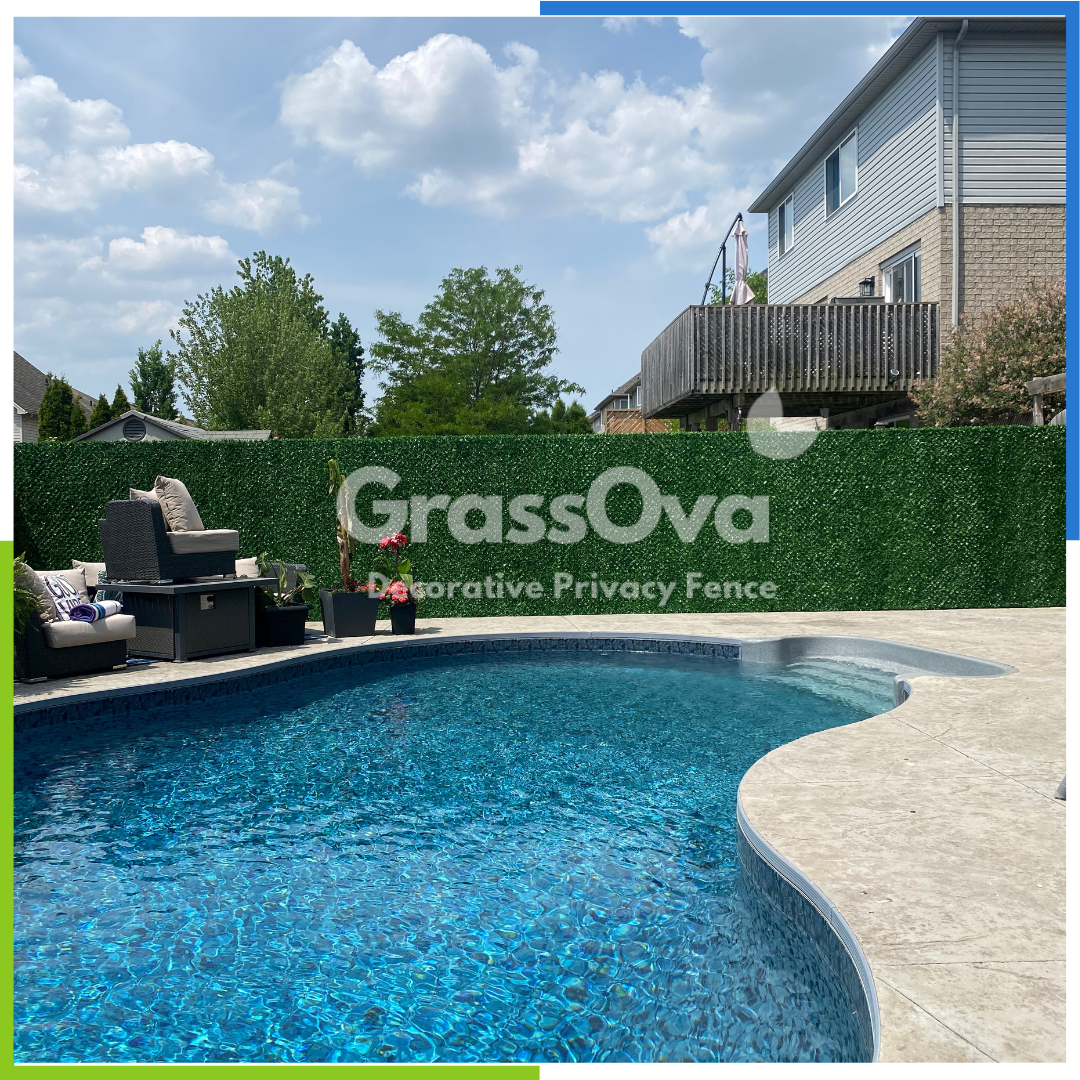
Outdoor privacy is a top priority for homeowners, renters, and property managers alike. Whether you’re looking to block views from neighbors, enhance your backyard privacy, or conceal a pool or patio area, the right privacy solution can dramatically improve both comfort and property value. With modern materials and innovative designs, privacy fencing is no longer just functional — it can also elevate the look of your outdoor space while standing up to weather and seasonal conditions.
What Makes Outdoor Privacy Important?
Privacy affects how outdoor areas are experienced. In many communities, yards and patios are exposed to neighboring homes, streets, and public spaces, which can make outdoor relaxation feel less private and comfortable. Privacy fencing solves this by creating a visual boundary that helps define your outdoor living space and makes it feel more enclosed and protected.
In climates with seasonal variations — like cold winters and warm summers — a privacy solution also needs to be durable and low maintenance. Traditional privacy fences have served this purpose for decades, but they often come with trade-offs like high maintenance, seasonal wear, or complex installation.
Traditional Privacy Fence Options
Privacy fencing has traditionally focused on materials like wood, vinyl, and composite panels. Each option has benefits and drawbacks when it comes to long-term performance and outdoor aesthetics.
Wood Privacy Fences
Wood fences offer a classic, warm look and strong visual screening. They can be customized and painted or stained to complement a home’s architectural style. However, wood is prone to weathering; moisture and temperature changes can lead to rot, warping, and cracking unless regular maintenance is performed.
Vinyl Privacy Fences
Vinyl fencing is low maintenance and resistant to many of the issues that plague wood fencing, such as rot and insect damage. Vinyl stays looking fresh with minimal upkeep. That said, vinyl fences can have a higher upfront cost, and color options are more limited compared to other materials.
Composite and Metal Privacy Fences
Composite and metal privacy solutions provide durability with a modern aesthetic. Metal fences — like aluminum and steel — can hold up well in varying conditions, while composite materials combine resilience with a more natural look. These fences often require professional installation and may feel more rigid or industrial compared to other solutions.
Grass Privacy Fences: A Modern Outdoor Privacy Solution
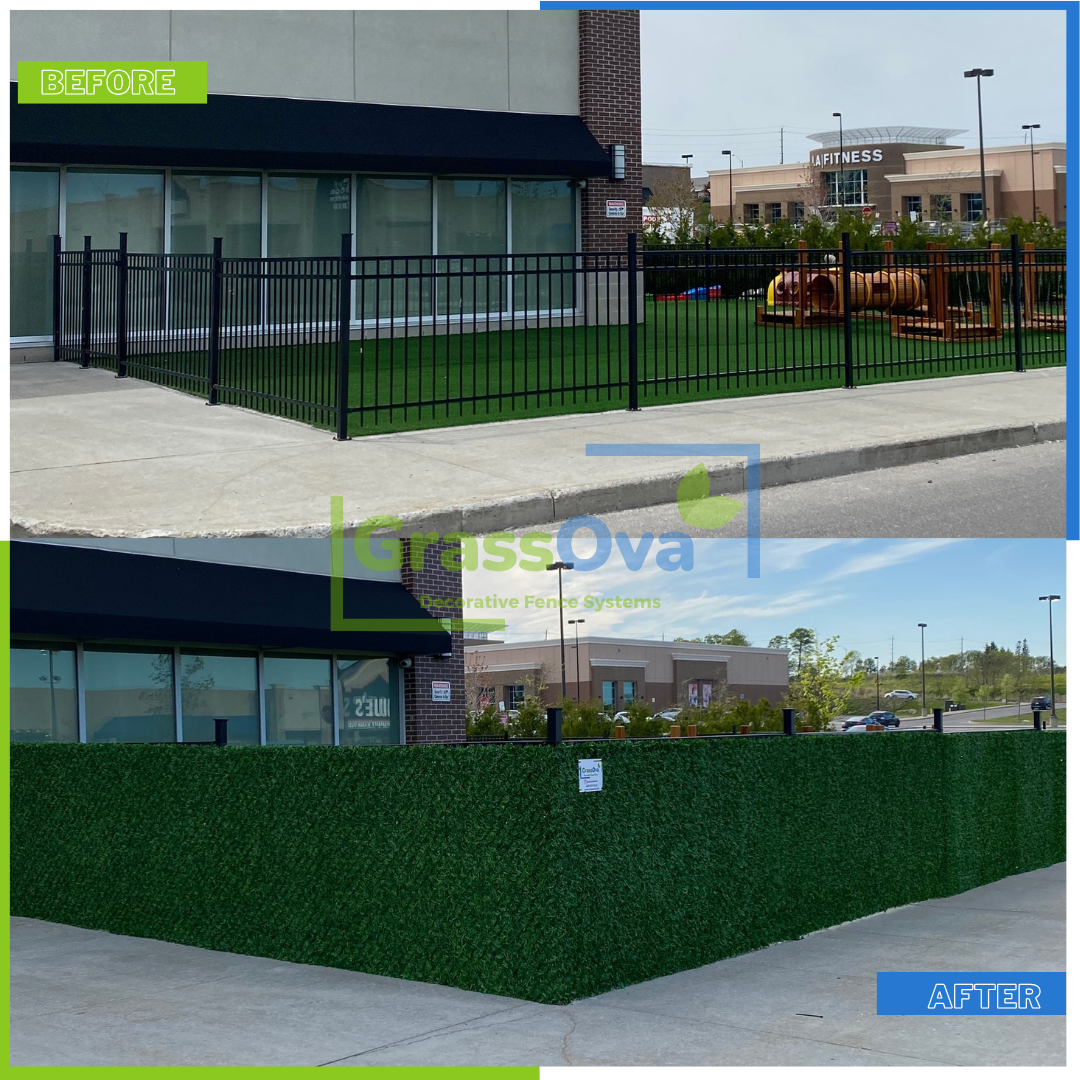
As outdoor design trends evolve, grass privacy fences have emerged as a modern alternative that combines aesthetics, ease of installation, and long-term performance. Unlike traditional fencing, grass privacy systems are designed to upgrade your existing structure, such as a chain link fence, without removing or replacing it.
Systems like GrassOva attach directly to an existing fence and create a dense, visually solid privacy barrier that blends naturally with landscaping and outdoor design. With no need for digging, concrete work, or permits in many cases, grass privacy fencing delivers privacy quickly and with minimal disruption.
The Advantages of Grass Privacy Fencing
Grass privacy fencing provides several key benefits that address common outdoor privacy needs:
- Instant Privacy: Grass privacy panels cover gaps and open areas to block line of sight immediately.
- Aesthetic Appeal: The natural green look complements landscaping and outdoor living areas.
- Low Maintenance: Unlike plants or wooden materials, grass privacy requires almost no ongoing upkeep.
- Quick Installation: Attaches to existing fences without excavation, permits, or structural changes.
- Durable in Outdoor Conditions: Performs well in sun, rain, wind, and seasonal temperature changes.
Common Applications for Privacy Fencing
Grass privacy fencing works in a wide range of outdoor settings:
- Residential Backyards: Defines outdoor living space and blocks unwanted views from neighbors.
- Pool Areas: Enhances comfort and seclusion around pool decks and patios.
- Balcony Privacy: Upgrades balcony railing with a natural screen for condo and apartment living.
- Public Recreational Areas: Provides screening for play areas, sports courts, and community spaces.
Why Grass Privacy Works Better for many Homeowners
While traditional materials like wood and vinyl provide privacy, they often come with ongoing maintenance demands or a more rigid look. Grass privacy fencing offers a flexible, visually appealing alternative that integrates seamlessly with existing outdoor features.
For homeowners who prioritize both privacy and outdoor aesthetics — especially in yards with existing chain link or metal fencing — grass privacy provides a balanced solution that doesn’t compromise on design or durability.
Installation Tips for Grass Privacy Fences
Installing grass privacy fencing is straightforward but benefits from good planning:
- Measure Before You Buy: Calculate total fence length to determine how many panels you need.
- Check Compatibility: Ensure the system is compatible with your existing fence structure (chain link, wood, metal).
- Prepare Your Tools: Most installations require basic tools — zip ties, zip posts, or clamps.
- Follow Manufacturer Guidelines: Follow recommended panel spacing and attachment methods for long-term stability.
Summary
Privacy fencing plays an essential role in improving how outdoor spaces are experienced. Traditional fence materials like wood and vinyl offer solid performance but often come with maintenance and cost challenges. Grass privacy fencing presents a modern, visually appealing alternative that transforms existing fences into private, inviting outdoor areas.
With its low maintenance, easy installation, and strong visual impact, grass privacy fencing is an excellent choice for homeowners and property managers seeking to enhance privacy without the complexities of traditional fence builds.